
Mastery Over Trends: Why Sensory Cooking is the Ultimate Kitchen Control
- Chef Riq

- Apr 21
- 4 min read
The world is finally catching up to something we’ve known for a long time.
In 2026, the food industry is obsessed with “sensory-first eating.”
Chefs are geeking out over aroma mapping. Brands are marketing “tactile crunch.” Influencers are teaching you how to “SenseMaxx” your dinner. They treat it like a breakthrough.
At Unseen Cuisine, sensory cooking isn’t a trend. It’s the foundation of mastery.
While others are learning to slow down and taste, we’ve been refining the discipline of Kitchen Control. For us, sensory cooking isn’t a wellness vibe or a creative experiment. It’s authority.
It’s the difference between following a recipe like a robot and commanding your kitchen like a professional.
When you stop relying on your eyes to tell you when something is ready, you unlock a level of independence that changes everything.
This is not about limitation. It’s about expanding your awareness until you are the most capable person in the room.
The Philosophy of the Culinary Cockpit™
Before you master flavor, you must master your environment.
At Unseen Cuisine, we teach the Culinary Cockpit™ philosophy. Think of a pilot in a flight deck. They don’t fly by looking out the window. They rely on instruments, deep system knowledge, and a layout where every switch and lever is exactly where it belongs.
Your kitchen should function the same way.
Kitchen Control begins with:
Organized spatial awareness
Intentional tool placement
Prep that prioritizes tactile clarity
When your tools are intuitively placed and your ingredients are prepped by feel, you stop reacting to the kitchen and start directing it. You aren’t “just cooking.” You’re operating.
That level of organization creates Kitchen Confidence. Whether you’re looking for specific cooking tools designed for tactile efficiency or you’re refining your workflow, the goal stays the same: make the process second nature so your brain is free to focus on flavor, timing, and execution.
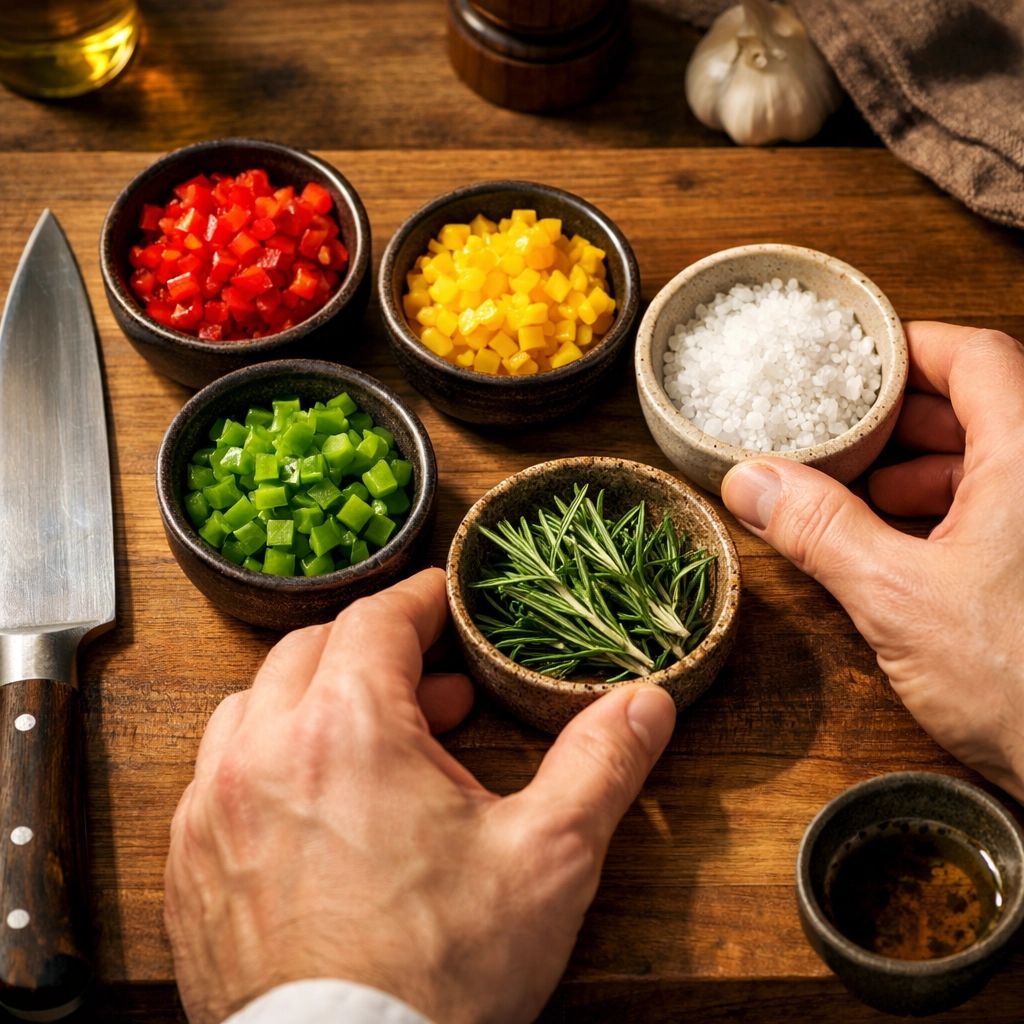
Sound: The Rhythm of Heat
Most cooks wait for visual cues. You listen.
When protein hits a hot pan, the first sound is a wet, aggressive sizzle. That’s moisture escaping. Your kitchen is already talking to you, and those sounds are part of the instruction.
As the sear develops, the sound shifts into a dry crackle. That crackle signals the Maillard reaction taking hold (that’s the browning). Moisture is gone. Flavor is locking in.
If the sizzle fades too quickly, your pan is too cool. If it pops violently, your heat is too high.
Sound gives you real-time data. Sound and smell tell the truth when your eyes might deceive you.
When you cook this way, you’re not guessing. You’re adjusting based on information. That’s Kitchen Control.
With practice—and by building your sensory cooking skills—you can hit the perfect crust on a Rib Roast or nail the timing on Coastal Seared Scallops without chasing a timer.
Smell: The Architecture of Flavor
Aroma is the fastest path to the brain, yet most cooks treat it as background noise. In the Unseen Cuisine methodology, smell measures balance.
Raw garlic hits the front of the nose—sharp and stinging. As it mellows, the scent deepens—sweet and earthy.
When you add acid, you can smell whether it cuts the fat properly. If a dish smells flat, it likely needs salt or heat. If it smells bright, balance is shifting toward completion.
You don’t wait for a timer. You inhale the steam and adjust the architecture of flavor in real time. That’s cooking by smell and sound with control, not guesswork.
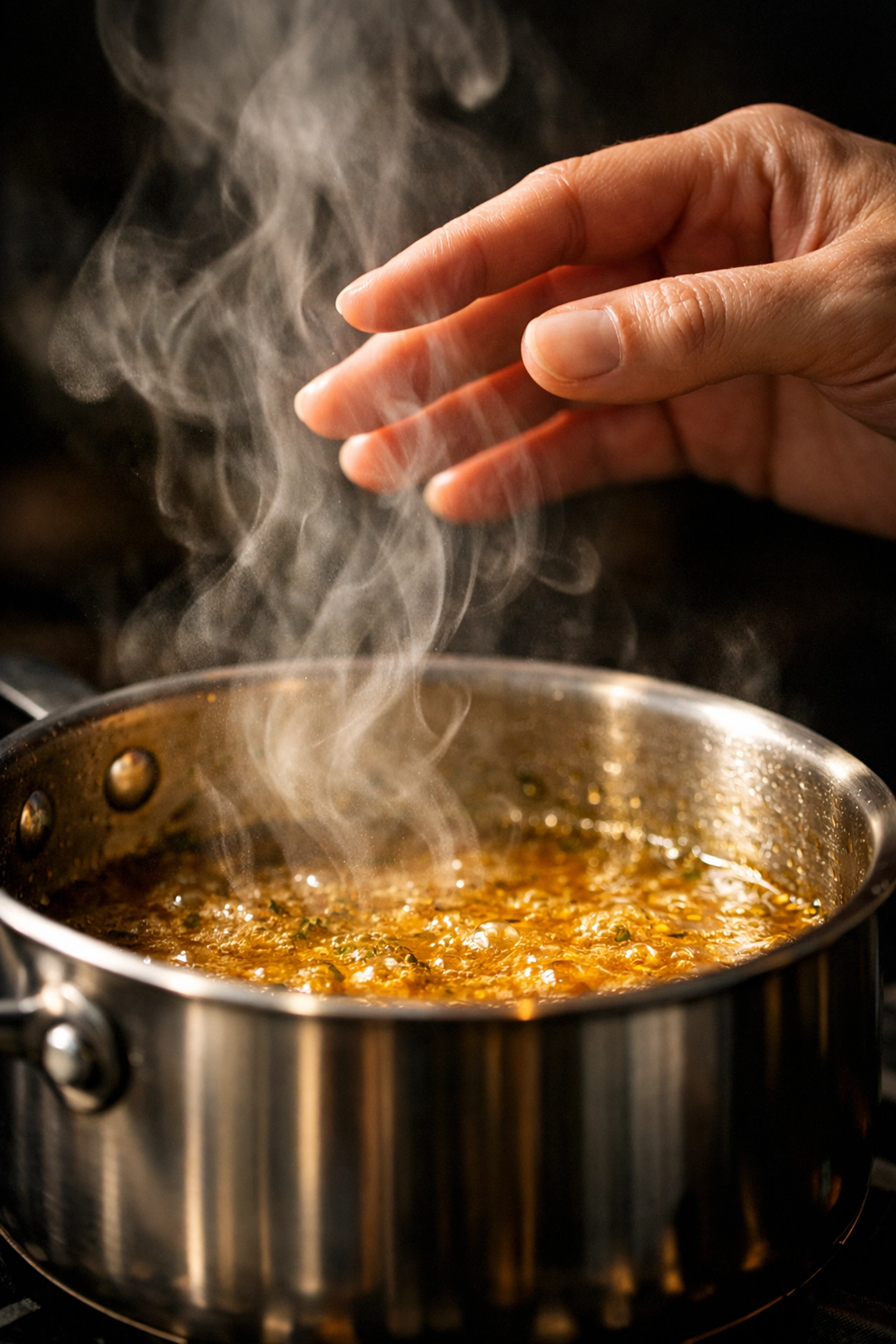
Touch: Authority on the Board
The trend conversation focuses on texture at the table. Real mastery happens at the cutting board. This is where blind cooking techniques build serious advantage for different learning styles and abilities—because your hands don’t guess.
A crisp bell pepper sends a sharp vibration through the knife. An aging onion feels dull and yielding. A properly proofed dough has tension and elasticity.
Touch teaches structure.
When you understand resistance, density, and yield, you move with rhythmic intentionality instead of hesitation. That tactile connection builds kitchen confidence.
It shifts you from:
“I hope this works.”
To:
“I know this is right.”
Beyond the Trend: Authority Creates Independence
Trend-driven sensory eating focuses on pleasure. At Unseen Cuisine, we focus on authority.
Authority builds confidence. Confidence builds independence.
For many in the blind and low-vision community—and for those navigating chronic illness—the kitchen can feel intimidating. It can feel like a place of limitation. We reject that narrative entirely.
Sensory cooking is not a backup system. It is a more precise, intimate, and reliable way to cook.
When you master the Culinary Cockpit™, you aren’t just making dinner. You’re proving to yourself that you can navigate complex environments with skill and control.
That independence doesn’t stay in the kitchen. It follows you everywhere.
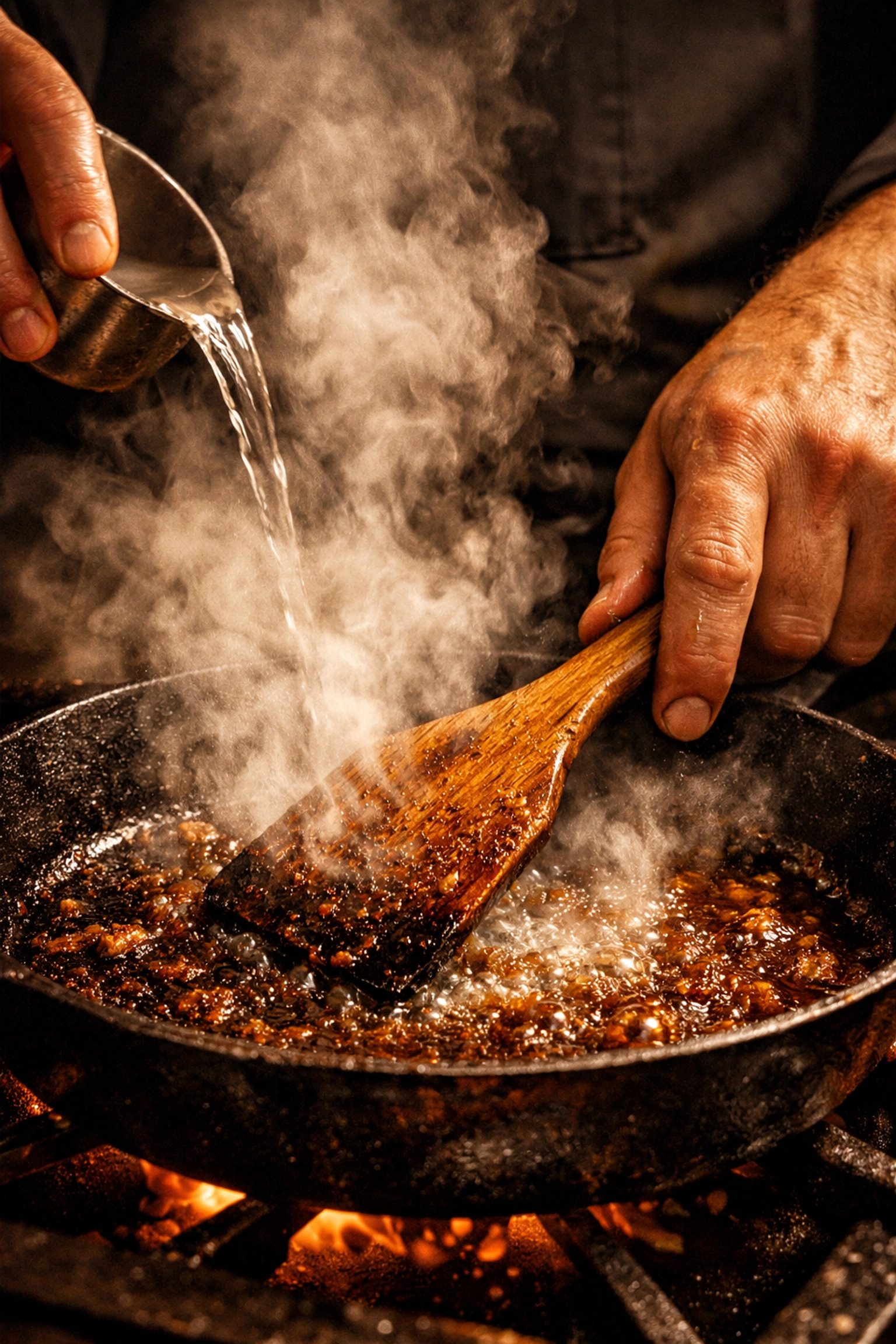
How to Begin Building Kitchen Control
You don’t need a viral trend to guide you. You need training. Start here:
Engage Your Senses: Turn off distractions. Close your eyes for sixty seconds while something cooks. Listen. Smell. Catalog the cues.
Learn the Fundamentals: Join our cook-alongs where we break down these sensory signals in real time.
Equip Your Cockpit: Explore our all-products page and choose tools that prioritize tactile clarity and organized workflow.
Step Into Mastery: Ready to build your own system of Kitchen Control? Explore our coaching programs and get hands-on support that fits your life: Contact us today.
The food world may be discovering sensory eating today. But you’re ready for sensory mastery.
Stop watching the clock. Start listening to the pan. Your kitchen is waiting.
Independence changes everything. Give yourself permission to learn as you go—and remember: the most important ingredient in any dish is your own authority at the stove.
Comments